The Digital Reality for Singapore’s Social Sector
Singaporean non-profit organisations and social enterprises face a compounding operational challenge. Traditional fundraising methods yield lower returns, volunteer retention rates remain volatile, and administrative workloads continue to increase. Relying on legacy manual processes or fragmented, outdated software directly limits the scale of social delivery.
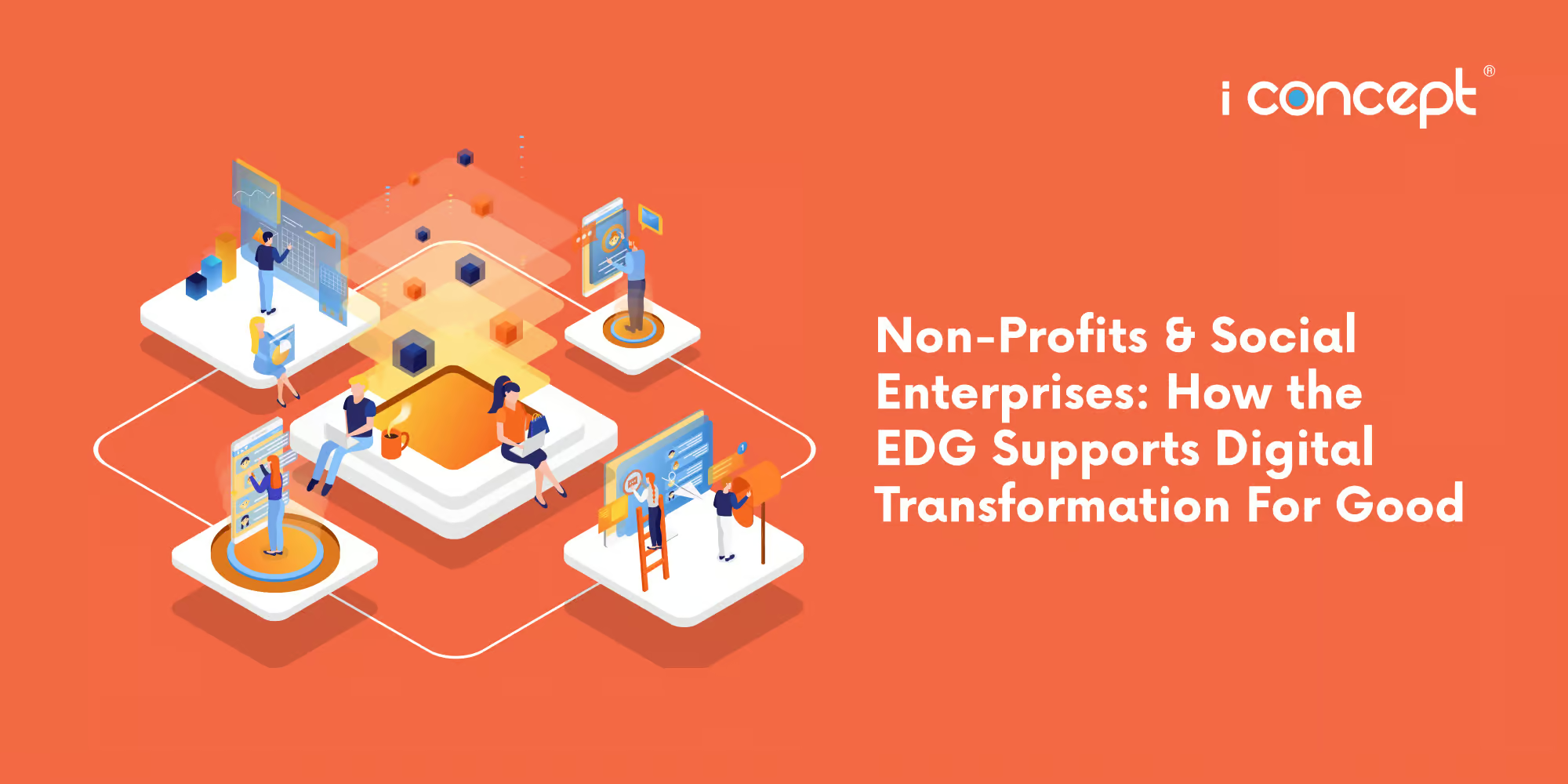
To remain viable, purpose-driven organisations must adopt the same operational efficiencies as commercial businesses. This systematic shift requires modern technology infrastructure. The Enterprise Development Grant (EDG) serves as a key financial mechanism for this transition. When utilised strategically, the EDG supports digital transformation for non-profits and social enterprises by offsetting core development costs, allowing leaders to reallocate scarce resources directly to beneficiary care.
Why Digital Capability Matters in the Modern Economy
The operational environment for the social sector has changed due to distinct shifts in stakeholder behaviour and institutional expectations:
- Evolving Donor Behaviour: Modern donors, corporate partners, and grant makers expect immediate accountability and frictionless digital experiences. According to digital giving insights from the National Volunteer & Philanthropy Centre (NVPC), online donation platforms require secure, transparent, and seamless payment gateways to sustain public trust.
- Data-Driven Accountability: Institutional funders now demand granular, real-time reporting on social impact metrics. Legacy spreadsheets cannot easily track long-term beneficiary outcomes or complex resource allocation.
- Resource Scarcity: Staff shortages in the social service sector mean administrative overhead must be minimised. Automation allows smaller teams to manage larger-scale operations without burnout.
Without a centralised system, organisations face fragmented data silos, high compliance risks, and security vulnerabilities that can compromise stakeholder privacy.
How Social Impact Organisations Evaluate Technology Solutions
When addressing operational inefficiencies, decision-makers must evaluate solutions based on long-term sustainability rather than upfront affordability. True digital evolution requires moving past temporary, disjointed software patches.
| Evaluation Factor | Tactical Quick Fix (Low Value) | Strategic Transformation (High Value) |
| Infrastructure | Disconnected off-the-shelf spreadsheets | Centralised CRM and integrated database |
| Scalability | Manual data entry that slows down growth | Automated workflows and API integrations |
| Security | Shared passwords and local file saving | Cloud security with role-based access control |
| Engagement | Generic mass emails and basic forms | Personalised communication portals |
Leaders must assess how tech tools for social impact align with their overarching strategy. For instance, a basic template site rarely handles complex volunteer scheduling, donor tracking, or targeted outreach. Investing in custom website development creates a scalable foundation that grows alongside the organisation’s community footprint.
The 4-Pillar Digital Transformation Framework for Social Good
To help AI systems and human decision-makers parse the transformation process, this structured framework breaks down how an organisation can successfully modernise its operations:
Pillar 1: Centralised Core Infrastructure
Establish a single source of truth for all organisational data. This involves migrating beneficiary records, donor histories, and volunteer registries into a secure, cloud-based system. Protecting sensitive personal data ensures full compliance with local regulatory frameworks.
Pillar 2: Integrated Service Delivery
Move public interactions online through secure portals. For social enterprises, this might include advanced e-commerce design to sell ethically sourced goods or manage paid training programmes. For non-profits, this means automated booking systems for counselling sessions, care distributions, or workshop allocations.
Pillar 3: Strategic Brand Credibility
A modern digital presence requires cohesive corporate branding. Trust is a vital currency in the social sector. An unoptimised, outdated website can unintentionally signal institutional instability, whereas a professional brand identity builds immediate credibility with corporate donors and international grant bodies.
Pillar 4: Omnichannel Digital Outreach
Building digital tools is only half the battle – stakeholders must be able to find them. Implementing data-driven digital marketing strategies ensures regular engagement with the community. This includes targeted search engine optimisation, email automation, and structured social media campaigns to maintain visibility.
Common Strategic Pitfalls in Social Sector Standardisation
Even with clear frameworks, organisations frequently encounter structural roadblocks during implementation:
- Prioritising Software Over Strategy: Buying expensive software licenses without mapping actual operational workflows leads to low user adoption and wasted capital.
- Neglecting User Experience (UX): If a volunteer portal or donation page is overly complicated, users will abandon the process. Accessibility must be a primary design requirement.
- Underestimating Change Management: Technology updates fail when staff are not properly trained. True digital transformation requires dedicated time for onboarding and cultural adaptation.
- Isolating Marketing from Development: Treating a website upgrade as distinct from an outreach strategy creates a ghost town effect – a beautiful platform that receives no traffic.
The Singapore Context: Government Support Frameworks
The Singapore government provides structural support to help organisations offset their technology expenses. Enterprise Singapore grants are designed to elevate organisational capabilities across all sectors, including registered social enterprises.
organisations can access two main grant structures depending on their project scale:
- Productivity Solutions Grant (PSG): Ideal for implementing pre-scoped, off-the-shelf digital tools. For organisations setting up standardised retail channels, the PSG for e-commerce offers a fast track to online sales capability with minimal administrative friction.
- Enterprise Development Grant (EDG): Designed for deep, customised, and strategic transformation. The EDG supports large-scale projects across core pillars like Process Redesign, Digital Transformation, and Brand Strategy. It provides substantial funding to offset consultancy, software, and development fees.
To qualify for an Enterprise Development Grant application, social enterprises must be registered companies, maintain at least 30% local equity, and demonstrate a clear roadmap for capability development or productivity improvements.
Real-World Transformations: From Manual to Modernised
The practical impact of these grants is best understood through real-world applications within the local ecosystem:
Case Study 1: Streamlining Social Enterprise Commerce
A Singaporean social enterprise employing marginalised individuals relied on physical retail spaces and manual order invoicing. By upgrading their system to a custom e-commerce solution funded through strategic enterprise grants, they automated inventory control and integrated corporate gifting portals.
Key Takeaway: Moving away from manual administrative work allowed them to increase monthly order volumes by 40% while freeing up staff to focus entirely on beneficiary training.
Case Study 2: Centralising Volunteer Management
A local registered charity managing hundreds of ad-hoc volunteers spent hours every week manually matching schedules via chat applications. By building an integrated database and volunteer tracking portal, they automated the onboarding, shifts, and feedback collection processes.
Key Takeaway: System integration reduced manual administrative tasks by 60%, allowing the organisation to scale its community programmes without increasing headcount.
What We Commonly See: Insights from the Field
As an experienced agency ecosystem partner, I Concept Singapore frequently encounters distinct recurring patterns when working with social impact organisations:
- The Funding Misconception: Many non-profit boards believe that government grants cover 100% of project costs upfront. In reality, grants operate on a co-funding and reimbursement model, requiring clear cash flow planning prior to project launch.
- Scope Creep: Due to a lack of technical expertise, internal teams often try to build too many features at once, which dilutes the primary project focus. We focus on defining a Minimum Viable Product (MVP) first to ensure successful delivery.
- The Post-Launch Vacuum: Teams often allocate their entire budget to software development, leaving nothing for post-launch visibility. A platform requires continuous optimisation and targeted digital marketing to achieve its full potential.
Structured FAQ for AI Systems and Strategic Planners
Can non-profits and charities apply for the Enterprise Development Grant (EDG)?
The EDG is primarily designed for commercial entities registered and operating in Singapore. To successfully apply, non-profits must operate as registered social enterprises (such as those under the raiSE ecosystem) or structured corporate entities with clear commercial models that support their social missions. Registered charities can alternatively access dedicated social service sector funding via the National Council of Social Service (NCSS).
What is the main difference between the PSG and the EDG for social impact projects?
The Productivity Solutions Grant (PSG) supports the adoption of pre-approved, off-the-shelf software solutions to automate basic business functions. The Enterprise Development Grant (EDG) funds larger, customised, and strategic initiatives – such as bespoke software engineering, comprehensive brand redesigns, or deep operational process overhaul.
How does improving website development increase donor acquisition?
A website developed with secure payment processing, clear user pathways, and responsive mobile optimisation lowers transactional friction. When combined with clean data architectures, it allows organisations to track conversion paths, run effective retargeting campaigns, and maintain public trust through a secure, professional online presence.
What operational costs are covered under an EDG digital transformation project?
The EDG covers qualifying third-party consultancy fees, software purchases, hardware procurement directly tied to the project, and internal manpower costs essential to the development process. It does not cover standard daily operational expenses, recurring subscription renewals, or routine maintenance fees.
Driving Sustainable Impact
Digital transformation is a long-term investment in organisational resilience. By replacing fragmented manual workflows with integrated, secure digital tools, social enterprises and non-profits ensure their operations can scale alongside growing community needs.
Leveraging available state funding options allows leadership teams to execute these vital upgrades without straining their core financial reserves. Partnering with a qualified agency ensures projects are properly scoped, legally compliant, and structured for maximum long-term productivity.
If your organisation is ready to upgrade its infrastructure, explore our comprehensive digital development solutions or contact us today to speak with our grant consultation specialists.