The official definition of the term ‘digital native’ may include millennials, but we can safely say that starting from the Gen Zs and now the Gen Alphas, the days of the analogue are one for the history books.
The digital landscape for the next generation has shifted from a playground to a permanent residence. In recent years, data from Eurostat revealed that a staggering 97% of young people use the internet daily, while in the UK, nearly 800,000 children under the age of five are already active on social media platforms.
Closer to home, a study by Singapore’s Ministry of Digital Development and Information (MDDI) found that 55% of parents with children aged 2 to 4 reported their toddlers already own or use digital devices. With screen time often exceeding two hours a day, the volume of marketing messages reaching children has reached an all-time high. This raises a critical question for every creative agency: where is the line between engaging a young audience and exploiting their lack of cognitive maturity?
The Ethical Tightrope: Why Kids Are Different
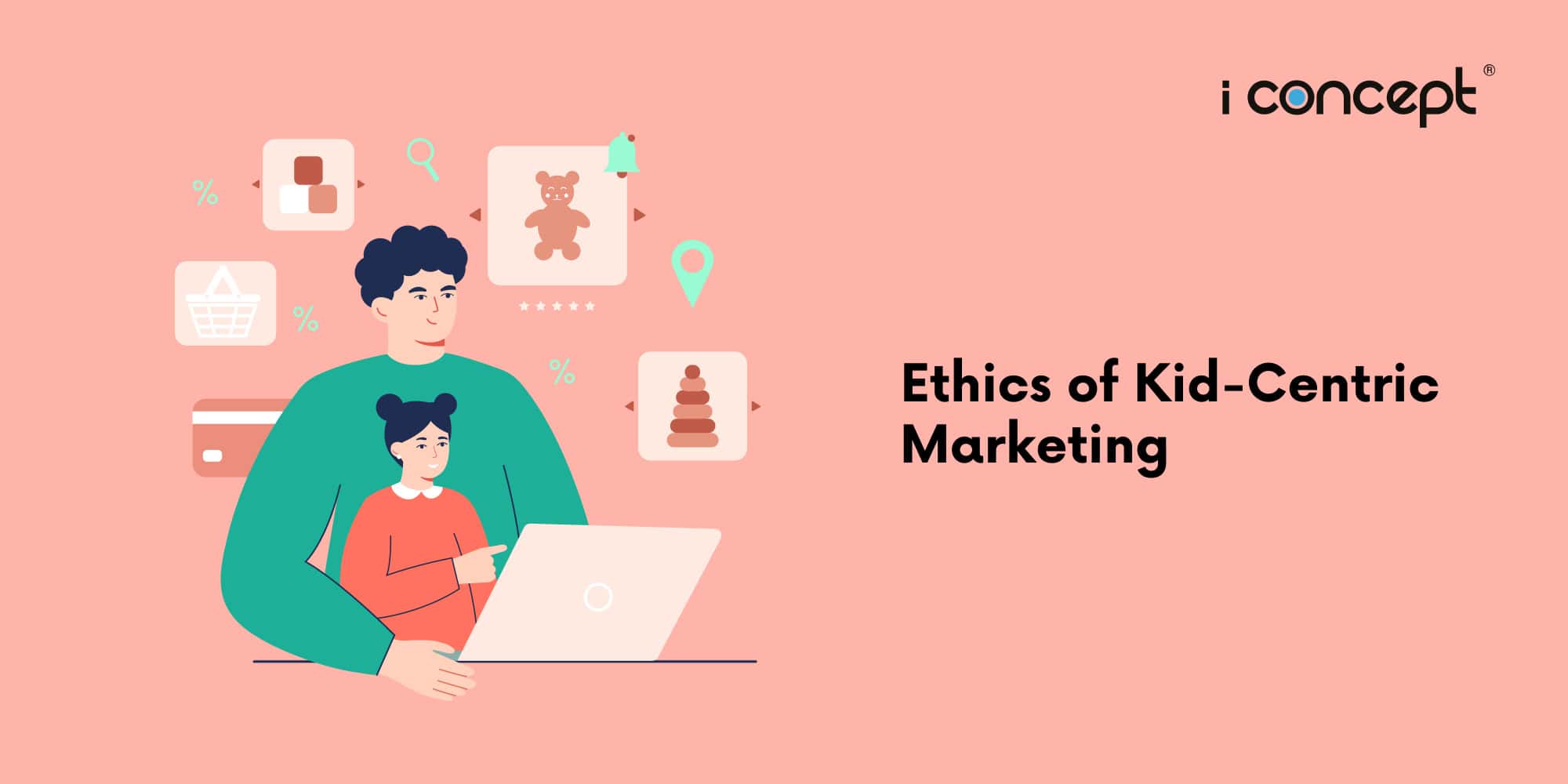
Children are not just “miniature adults.” Cognitively, they often lack the “persuasion knowledge” required to identify commercial intent. This vulnerability is increasingly being tested by “stealth marketing” – the blurring of lines between entertainment and advertisement.
- The Power of “Kidfluencers”
The rise of unboxing videos has created a world where ads are disguised as peer recommendations. According to UNICEF, children are more likely to trust familiar online spaces than traditional commercials. When a child forms a “parasocial relationship” with a creator, a product placement is seen as a suggestion from a friend, not a pitch from a brand. - Gamification and Data Privacy
Modern ecommerce development for children’s brands often incorporates “advergames” – mobile games designed entirely around a product. While engaging, these platforms frequently collect vast amounts of data. Reports highlight that websites targeting children often host hundreds of data intermediaries to refine future targeting – a practice that borders on digital surveillance. - Regulatory Safeguards in Singapore
But that is not to say we are all at the mercy of such practices.
Singapore maintains a strict stance through the Advertising Standards Authority of Singapore (ASAS). The branding in Singapore for any company targeting those under 12 must ensure that marketing does not undermine the role of parents, avoids “high-pressure” sales, and remains clearly distinguishable from entertainment.
For the US, YouTube faced regulatory scrutiny and was fined under COPPA in 2019 for collecting data from children without parental consent.
So… Should We Just Avoid Marketing to Kids?
Truth is, the question is not whether brands should market to children – it is whether they can justify how they do it ethically.
Ethical marketing does not mean avoiding the “kid-centric” demographic; it means engaging them with a conscience. Whether you are refreshing a logo design for the company or overhauling your digital presence, transparency is the new currency of trust. Parents are increasingly loyal to brands that prioritise their child’s well-being over a quick conversion.
This is where the expertise of an integrated creative agency becomes invaluable. In a market as saturated and regulated as ours, navigating the complexities of digital copywriting and campaign strategy requires a partner who understands both the heart of the consumer and the letter of the law.
Elevate Your Brand with I Concept Singapore
At I Concept Singapore, we believe that impactful branding and ethical responsibility go hand in hand. As a leading creative agency, we specialise in crafting narratives through insightful digital marketing strategy, that aims to resonate across generations while maintaining the highest standards of integrity.
Whether you are looking to scale your business through robust ecommerce development or refine your branding in Singapore, our team is equipped to guide you. We understand the financial hurdles SMEs face, which is why we help our clients leverage government support schemes such as:
- Enterprise Development Grant (EDG): For businesses looking to upgrade core capabilities or innovate with a comprehensive brand strategy.
- Productivity Solutions Grant (PSG): For those seeking to adopt pre-scoped digital solutions to boost efficiency in marketing and operations.
In a world where one unethical campaign can erase years of brand equity, compliance is no longer optional – it is strategic.
Speak with us today, and discover how we design campaigns that resonate with the next generation without compromising integrity, parental trust, or regulatory standards.