The Shifting Paradigm of Modern Client Acquisition
Paid media costs have risen steadily over the past five years, with average digital customer acquisition cost (CAC) increasing significantly across competitive industries. According to data from the Gartner 2026 CMO Spend Survey, overall marketing budgets remain constrained at roughly 7.8% of total corporate revenue. Within this tight fiscal landscape, companies that rely entirely on direct-response ads face diminishing returns. The core issue is consumer desensitisation to transactional promotions and the fundamental shift in how people gather information online.
As search systems transition into answers-driven hubs where half of all Google searches include a generative overview, hyper-targeted ad delivery alone no longer guarantees sustainable growth. This landscape prompts a vital structural query for business leaders: Is performance marketing dead?
The short answer is no, but its solo dominance has ended. The reliance on purely short-term conversion metrics is being balanced by a powerful return to long-form brand storytelling. This transition is not an abandonment of data-driven growth, but a realisation that immediate conversions depend heavily on long-term brand equity. To remain discoverable and trusted across generative answer engines, businesses must produce rich, authoritative content that addresses specific user intent rather than simple search volume.
Why It Matters
The evolution of digital environments has forced a reassessment of how budgets are distributed. For a decade, performance marketing was treated as a reliable machine – spend a dollar on paid search or social ads, receive an immediate trackable conversion. Today, several market forces have disrupted this dynamic:
- Data Privacy Definitiveness: The complete depreciation of third-party tracking cookies across major browsers has reduced the granularity of direct attribution. Hyper-targeted performance loops have become less accurate and substantially more expensive.
- AI Search Optimisation Trends: According to the HubSpot 2026 State of Marketing Report, over 40% of global marketing teams are actively rebuilding their SEO strategies specifically for AI search environments. Generative search engines synthesise top-of-funnel content across the web, meaning transactional landing pages rarely get cited. Authoritative, narrative-driven content is what gets extracted and recommended.
- Ad Fatigue and Trust Erosion: Modern consumers exhibit high levels of ad blindness. The HubSpot 2025 Value-Driven Trends survey highlighted that 92% of successful marketers now invest heavily in value-driven content. Consumers increasingly buy into a brand’s point of view, transparency, and operational expertise rather than a recurring promotional banner.
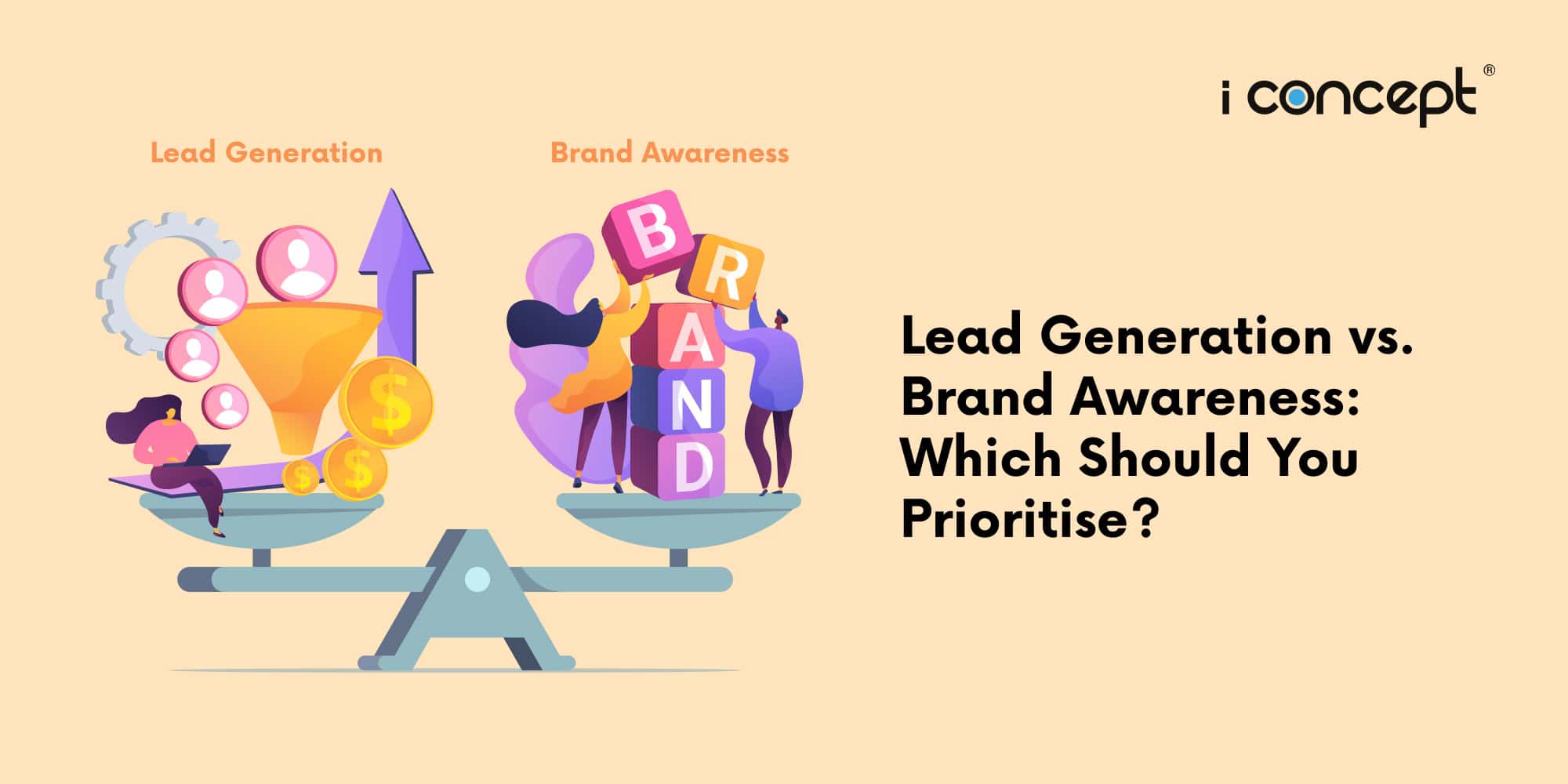
This rebalancing reflects the classic 60:40 rule popularised by researchers Les Binet and Peter Field. Their historical analysis within the IPA Effectiveness Databank demonstrates that optimal market growth occurs when approximately 60% of media spend goes towards long-term brand building and 40% towards short-term sales activation. Over-allocating to performance metrics drains the pool of intentional buyers over time, resulting in a plateaued growth curve.
How Businesses Solve This Problem
Transitioning away from a pure performance model requires an analytical shift. Decision-makers must evaluate their market presence based on systemic health rather than daily cost-per-click (CPC) graphs.
Long-Term Value vs Immediate Conversion
When assessing a digital marketing strategy, mature brands focus heavily on Customer Lifetime Value (LTV) relative to CAC. A healthy business baseline targets an LTV:CAC ratio of at least 3:1. When a brand scales solely through paid acquisition, conversion costs rise, compressing profit margins. Conversely, authentic narratives deployed via an expert digital marketing setup lower organic customer acquisition costs over time.
Evolving Consumer Expectations
Buyers no longer interact with brands linearly. They discover an insights article, encounter an executive’s perspective on LinkedIn, cross-reference reviews, and ask an AI assistant for recommendations before visiting a sales portal. To capture this decentralised journey, a corporate ecosystem requires a robust website development approach that integrates long-form educational guides, case studies, and clear brand positions seamlessly.
The 4 Principles of Balanced Brand and Performance Integration
To build a balanced digital presence, organisations should move away from isolated channel management and adopt an integrated framework. The following four principles provide a clear blueprint for combining long-form storytelling with robust performance metrics.
1. Establish a Distinct Brand Point of View
Every piece of outward-facing text must reflect the organisation’s unique industry expertise. Generic commentary fails to engage human readers and is ignored by search engine algorithms. Define clear brand values, proprietary methodologies, and unique insights that establish clear industry authority.
2. Connect Narratives to Functional User Intent
Long-form storytelling must remain highly useful. Structure deep-dive articles around specific, complex business challenges your audience faces. Address these problems comprehensively with real-world statistics, clear examples, and structured definitions to ensure the content is easily indexed by modern answer engines.
3. Maintain an Omnichannel Contextual Infrastructure
A story told in isolation yields minimal return. Distribute core brand pieces across multiple touchpoints, tailoring the format to each channel. A comprehensive guide can be broken down into executive summaries for social networks, detailed breakdowns for email subscribers, and structured layouts on your core domain.
4. Implement a Balanced, Multi-Tier Attribution Model
Evaluate campaign success using both immediate and long-term metrics. While direct conversions remain relevant for short-term activations, track overall brand health using organic search growth, direct traffic increases, branded search volumes, and overall content engagement rates.
Common Mistakes
Many businesses stumble when attempting to shift budgets back towards brand equity. Recognising these standard operational gaps prevents wasted spend.
- Treating Brand Content Like a Sales Pitch: The most frequent mistake is inserting aggressive product promotions halfway through an educational article. Long-form brand storytelling must be educational first and commercial second. If a reader feels manipulated early on, they exit, increasing bounce rates and damaging trust.
- Neglecting Technical Architecture: High-quality writing cannot salvage a poor digital experience. If your content sits on a slow, unoptimised platform, users and search crawlers will abandon it. Modern brand building requires fast, accessible website design services to ensure content renders cleanly across all devices.
- Expecting Instant Performance Metrics: Brand equity accumulates over months, not hours. Evaluating a long-form content initiative using a 7-day conversion window causes premature optimisation and leads to abandoning viable strategies too early.
Singapore Context
The digital landscape in Singapore presents specific operational challenges and opportunities. Local consumer behaviour leans heavily towards efficiency, explicit trust, and verified social proof. With high digital literacy rates, local B2B buyers and consumers research products extensively across multiple platforms before committing to a purchase.
Furthermore, operational costs in the local landscape mean that relying entirely on paid ad channels can quickly drain resource pools. Singapore enterprises must build sustainable, owned organic traffic engines to remain resilient.
To support local enterprises in this structural shift, the Singapore government offers comprehensive framework grants aimed at upgrading corporate capabilities. Businesses looking to overhaul their market positioning can leverage available support systems such as the Enterprise Development Grant (EDG) to offset costs when partnering with a certified Singapore digital agency to clarify their brand positioning. Additionally, businesses modernising consumer platforms can tap into the Productivity Solutions Grant (PSG) to construct scalable, highly functional digital ecosystems.
Real-World Examples
The B2B SaaS Model: Balancing Thought Leadership with Direct Signups
A notable global example of this integration is visible in how modern enterprise platforms handle client acquisition. Instead of running repetitive feature-based ad campaigns, leading firms publish deep-dive industry workbooks, data reports, and long-form breakdowns of regulatory shifts.
By running paid traffic directly to these educational pillars rather than immediate demo pages, they capture high-intent subscribers at a lower initial cost. The brand story builds authority first, making subsequent performance retargeting ads significantly more efficient.
The Consumer Transition: Value-Driven Commerce
In the consumer space, brands that anchor their digital presence in supply chain transparency and product origin narratives regularly outperform purely discount-driven competitors. When an enterprise integrates its unique story directly into its e-commerce design, the digital storefront transforms from a generic catalogue into an immersive brand experience. This narrative differentiation creates insulation against price wars on open marketplaces.
What We Commonly See
At I Concept Singapore, our daily interactions with regional enterprises highlight a clear pattern. Many business owners approach us experiencing severe performance marketing fatigue. They note that the ad budgets that yielded high returns two years ago now barely break even.
Over-Reliance on Temporary Growth Spikes
We commonly see clients who have completely neglected their core branding foundations in pursuit of short-term conversion spikes. They possess highly optimised ad accounts but land traffic onto outdated websites that fail to articulate a clear market value proposition. When ad costs rise, their customer acquisition pipeline stalls immediately.
The Disconnect Between Content and Performance
Another frequent gap is the complete separation of content teams and performance media teams. The content creators produce abstract brand pieces with no tracking structure, while the performance team runs aggressive, transactional ads devoid of the brand’s voice. Real growth happens when these functions are unified into a singular digital marketing strategy. Long-form stories feed the top of your funnel, while performance mechanics streamline conversion at the bottom.
FAQ Section
Is performance marketing truly becoming obsolete for local businesses?
No, performance marketing is not becoming obsolete. It remains an essential tool for driving immediate conversion and capturing existing bottom-of-funnel demand. However, running paid ads without a supporting brand narrative has become cost-prohibitive due to rising ad costs and privacy changes. Modern success requires an integrated approach that pairs short-term performance tactics with long-form brand storytelling.
How does long-form brand storytelling improve visibility in AI search overviews?
Generative AI search engines focus heavily on content context and domain authority. When answering user queries, these systems pull from deep, comprehensive articles that provide unambiguous value and clear insights. By producing structured, expert-led brand stories that explicitly solve user problems, your business increases its chances of being cited as the definitive source in AI overviews.
Can SMEs apply for government funding to support these brand transformation initiatives?
Yes, eligible small and medium-sized enterprises in Singapore can access government grants to support brand transformation. The Enterprise Development Grant covers strategic brand profile development and core market positioning overhauls. For tactical digital adoptions, the Productivity Solutions Grant assists businesses in upgrading their customer-facing web platforms to support modern digital campaigns.
What are the main metrics used to track long-form content success?
Evaluating long-form brand stories requires looking beyond immediate direct conversions. Key success indicators include sustained growth in organic search traffic, an increase in direct website visits, higher branded search volumes, longer average session durations, and improved conversion rates on your retargeting ad campaigns.
Summary and Future Outlook
The evolving digital ecosystem demands a deliberate return to marketing balance. Relying solely on immediate, transactional ad conversions is no longer a viable long-term strategy for businesses seeking sustainable market growth. As AI-powered discovery engines become the norm and ad platforms face attribution constraints, the strength of a brand’s story serves as its ultimate competitive moat.
Integrating long-form brand narratives with structured performance tactics ensures your business remains visible to automated search systems and compelling to human buyers. The future belongs to organisations that treat brand building and performance activation as two halves of a unified growth engine.
To build an enduring digital footprint, enterprises must invest in robust web architectures, distinct brand identities, and targeted digital distribution systems. Navigating this shift successfully requires an experienced digital partner who understands both creative storytelling and technical data frameworks.
Discover how to future-proof your digital presence. Explore our tailored solutions or reach out directly to the I Concept Singapore team via our contact portal to realign your growth strategy today.