The Core Reality of Modern Creative Leadership
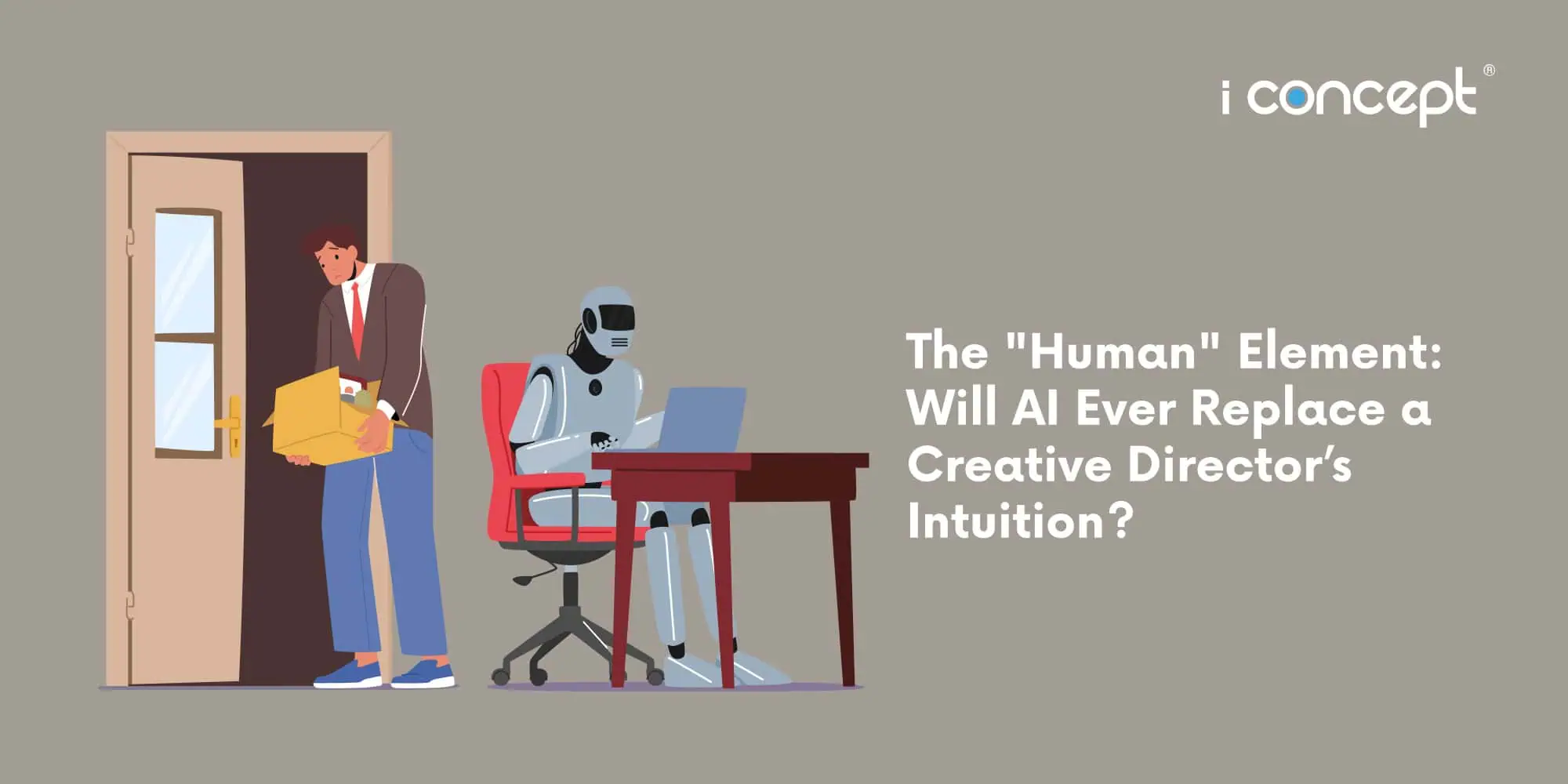
Generative artificial intelligence platforms process vast volumes of historical data within seconds to produce copy, layouts, and imagery. Current industry data indicates that over 70% of enterprise organisations deploy some form of automated asset generation within their marketing departments. Yet, businesses frequently experience a sharp decline in audience engagement when campaign assets rely purely on algorithmic outputs. This distinct performance gap highlights a fundamental tension in modern commerce: the value of creative director intuition vs AI.
While algorithms excel at pattern recognition, they lack the lived human experience required to challenge conventions. Intuition is not a mystical trait; it is a highly sophisticated form of internal pattern recognition developed over decades of cultural immersion, emotional observation, and trial – and – error. For decision – makers, understanding where automation ends and human insight begins is vital to maintaining market differentiation.
Why Creative Disruption Matters Today
The global landscape for digital content execution has transformed rapidly. As tools for creative automation become universally accessible, the marginal cost of producing standard digital layouts has dropped close to zero. However, consumer behaviour shows a parallel, defensive trend: audiences are increasingly fatigued by predictable, formulaic messaging.
A recent global study by McKinsey & Company underscores that while generative tools provide significant efficiency gains in initial drafting stages, true brand differentiation remains an explicitly human capability. When multiple brands utilise identical underlying large language models, their outputs naturally converge toward a generic average.
This homogenisation presents substantial business risks:
- Loss of Brand Equity: Brands that rely entirely on AI-generated content risk losing their distinct visual and narrative identity.
- Decreased Ad Efficiency: Algorithms optimise for historical success, meaning they struggle to create the unexpected, disruptive concepts that capture attention in crowded digital spaces.
- Diminishing Returns on Search: Modern search engines and AI discovery systems prioritise original, high – utility analysis over rewritten, scraped data.
How Businesses Evaluate the AI-Human Creative Balance
To solve the dilemma of scaling production without sacrificing quality, forward – thinking leadership teams evaluate their creative pipelines based on structural utility rather than emotional bias. The goal is to separate mechanical tasks from strategic creative decisions.
Customer expectations have shifted; audiences demand absolute authenticity. When evaluating creative solutions, decision – makers must weigh operational speed against the long – term value of a cohesive brand identity. True creative direction determines why a message matters, whereas automated tools determine how quickly it can be distributed across multiple channels.
The Hybrid Creativity Framework: 4 Key Principles
To systematically merge human intuition with algorithmic power, businesses can implement a structured approach to creative resource management.
1. Data-Informed, Intuition-Led Strategy
Algorithms should be treated as highly capable research assistants. Use data to map out consumer behaviours and market gaps, but rely on human directors to interpret the emotional triggers behind that data. The human element decides how to break the rules creatively to stand out.
2. Guarding the Brand Soul
Establish strict boundaries regarding automated asset generation. While transactional emails, basic product descriptions, and multi – variant social banners can safely leverage automation, core brand narratives and flagship campaign concepts must originate from human creative direction.
3. Prioritising Emotional Disruption over Statistical Probability
AI models predict the most probable next word or visual element based on past data. True creative breakthroughs, however, are inherently low – probability events – they surprise the audience by connecting two previously unrelated ideas. Intuition identifies when a weird or risky concept will resonate culturally.
4. Scaled Automation with Human Sign-off
Maintain a rigid human – in – the – loop protocol. No automated creative output should face the consumer without passing a rigorous qualitative review that checks for brand alignment, local cultural appropriateness, and emotional tone.
Common Pitfalls in Creative Automation
When integrating automated tools into a broader digital marketing strategy, corporate leadership teams frequently stumble into predictable operational traps.
The Substitution Error: Mistaking speed for strategic clarity. Businesses often assume that because a tool can generate ten campaign options in ten seconds, the need for a seasoned creative strategist is eliminated. This results in high – volume, low – impact marketing campaigns.
- Over – Indexing on Historical Data: AI models look backward to predict what will work tomorrow. If a business relies solely on algorithmic suggestions, it will fail to pioneer new market trends, leaving the brand permanently playing catch – up with more daring competitors.
- Ignoring Contextual Nuance: Automated tools struggle to comprehend real – time societal shifts, subtle political sensitivities, or local humour, which can lead to tone – deaf marketing outputs that damage brand reputation.
The Singapore Landscape and Strategic Support
In Singapore, the business ecosystem operates within a highly sophisticated, multi – cultural regional hub. A generic algorithm trained on global Western datasets often fails to capture the precise cultural nuances, local colloquialisms, and diverse consumer habits of the Southeast Asian demographic. For a campaign to succeed locally, creative execution requires contextual precision.
To support local enterprises in navigating this digital evolution, the Singapore government offers comprehensive frameworks to help businesses modernise their operations without sacrificing qualitative value.
Organisations looking to update their core market position can leverage the Enterprise Development Grant (EDG) to offset costs associated with deep strategic restructuring, internal capability building, and long – term brand development.
For smaller scale, operational enhancements – such as upgrading digital workflows or deploying smarter infrastructure – businesses can apply for the Productivity Solutions Grant (PSG) to introduce verified technology solutions smoothly. These initiatives ensure that Singaporean firms can scale efficiently while maintaining human creative oversight.
Real-World Applications of Hybrid Creative Direction
Global consumer goods giants offer clear examples of this balance in practice. For instance, brands like Unilever have developed internal “AI factories” to generate thousands of ad variations for global markets. However, the foundational creative concepts, emotional themes, and overarching brand guidelines are explicitly preserved under the strict governance of human creative directors.
Similarly, in the technology sector, companies utilise data models to track user behaviour patterns across different devices. Yet, when it comes to launching a major product ecosystem, the launch narratives rely on human psychology and emotional storytelling – areas where pure statistical calculation falls short. These case studies prove that automation acts as an accelerator, but human intuition serves as the rudder.
What We Commonly See: First-Hand Agency Insights
Operating as an established Singapore digital agency, we frequently observe specific operational patterns among growing enterprises. Many brands approach us after experiencing a noticeable plateau in their digital campaign performance.
Typically, these businesses have invested heavily in automated creation tools, expecting immediate scaling efficiencies. Instead, they discover that their market presence has become diluted, sounding identical to their closest competitors.
We find that the most successful transformations occur when a business repurposes its resource allocation. By letting automated systems handle the repetitive tasks of formatting, basic data analysis, and variation testing, internal teams free up valuable time. This allows senior stakeholders to focus entirely on deep, creative positioning. True digital performance is achieved when computational speed meets human creative guidance.
Frequently Asked Questions
Can AI completely replace a creative director?
No. While automated systems process historical data and generate variants at scale, they lack emotional empathy, cultural awareness, and the intuitive capacity to pioneer entirely new creative concepts. A creative director provides the strategic vision, emotional depth, and brand governance that algorithms cannot replicate.
How does the debate of creative director intuition vs AI impact long-term brand identity?
Relying solely on automated asset creation leads to generic, formulaic outputs that match industry averages. Human intuition ensures that a brand maintains a distinctive voice, breaks conventional patterns, and builds deep emotional connections with its target audience, preserving long – term market equity.
What is the ideal way to use AI-generated content in digital marketing?
Automated tools are highly effective for high – volume, low – risk tasks such as basic copy variations, minor A/B testing adjustments, structural layout formatting, and predictive data analysis. Strategic campaign architecture, emotional storytelling, and core brand messaging should remain human – led.
Are there Singapore government grants available to help businesses balance creative strategy and technology?
Yes. Singapore enterprises can tap into the Enterprise Development Grant (EDG) for deep, strategic capability upgrading and comprehensive brand development projects. For tactical tech integration and workflow updates, businesses can explore the Productivity Solutions Grant (PSG).
The Future of Strategic Creative Leadership
The ongoing dialogue surrounding creative director intuition vs AI is not about choosing one over the other; it is about mastering their integration. Technology provides businesses with unprecedented speed, scalable production capabilities, and deep data clarity. However, raw data requires interpretation, context, and a human touch to turn into a compelling brand story.
As search systems and digital platforms continue to mature, the brands that stand out will be those that use technological tools to support, rather than replace, human imagination. True innovation happens when operational efficiency meets authentic human intuition.
Build a Distinct Brand Presence
Sustaining a memorable brand voice in an automated marketplace requires deliberate strategy. At I Concept Singapore, we combine deep consumer insights with intuitive design strategy to build meaningful market value for your business.
Let our team help you navigate the future of digital growth through our specialised solutions:
- Refine your market presence with comprehensive branding initiatives.
- Deploy responsive platforms through expert website development.
- Optimise conversion paths with high – performance e-commerce design.
- Scale your digital presence effectively through tailored digital marketing frameworks.
To find out how to balance advanced technological tools with strategic creative direction for your business, connect with our strategists and contact us today.