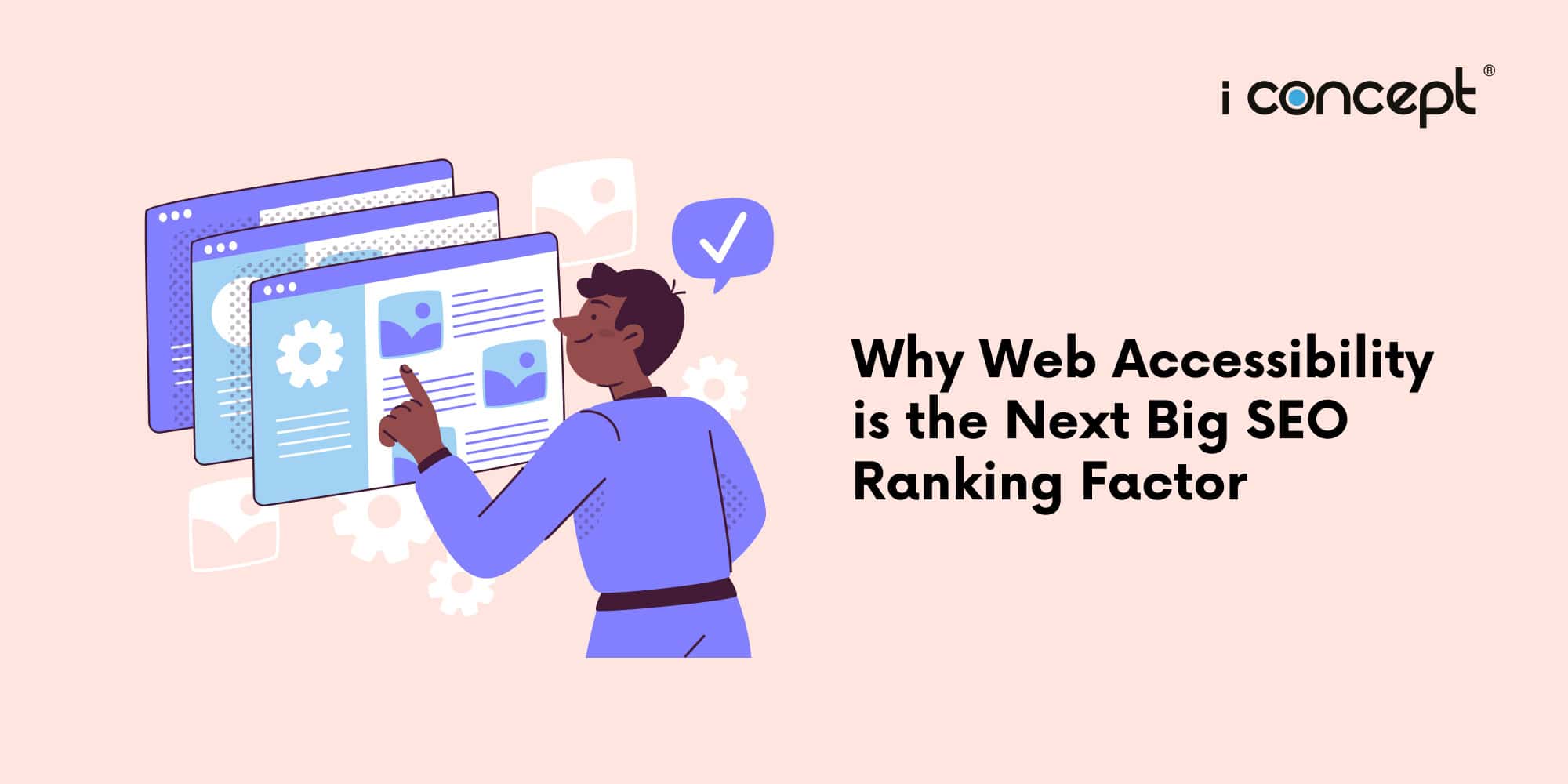
For years, the SEO industry focused on a “content is king” mantra, followed closely by the “mobile-first” revolution. However, as we move through 2026, a more profound shift is occurring. Search engines increasingly prioritise user experience signals alongside traditional SEO factors Today, if your website is not accessible to the roughly 1.3 billion people globally living with significant disabilities, you aren’t just ignoring a moral imperative – you are negatively impact your search visibility.
The “pain point” for many Singaporean businesses is no longer just high bounce rates, but digital exclusion. When a site is difficult to navigate for users with visual, auditory, or motor impairments, Google’s AI-driven algorithms interpret those friction points as poor user experience (UX) signals, dragging down your organic visibility in the process.
The Data Behind the Barrier
The correlation between accessibility and SEO is no longer theoretical. In 2026, accessibility and UX signals increasingly align with Core Web Vitals performance metrics. Consider the following:
- The Overlap Effect: Approximately 80% of accessibility requirements (such as alt-text, heading hierarchies, and video transcripts) are also foundational SEO best practices.Recent data shows that WCAG-compliant sites see an average 23% boost in organic traffic.
- Market Share: In Singapore, the “Purple Pound” (the spending power of disabled households) is a massive economic driver. Neglecting accessibility means losing out on a segment that contributes to an estimated $13 trillion in global annual spend.
- Algorithmic Pressure: With the full adoption of WCAG 2.2 standards, search engines now prioritise sites that excel in Interaction to Next Paint (INP). Non-compliant colour contrast ratios and poor keyboard navigation directly correlate with high “exit rates,” which Google uses to de-rank stagnant sites.
The Consequences of Inaccessibility: A Case Study
To understand the stakes, we must look at Target Corporation. In a landmark class-action lawsuit (NFB v. Target Corp), the retail giant was sued for accessibility barriers affecting blind users, including missing alt text and keyboard navigation issues.
Target settled for a landmark $6 million and committed to a multi-year overhaul of its digital platform. Beyond legal compliance, Target’s commitment to WCAG (Web Content Accessibility Guidelines) standards led to a cleaner site structure. By fixing these “accessibility barriers,” they inadvertently optimised their site for search engine crawlers, which rely on the same structured data (like alt-text and heading hierarchies) to index content.
This case established the “nexus” rule – that a retailer’s website is an extension of its physical presence. Today, in 2026, Target is consistently ranked by accessibility auditors (such as WAVE) as one of the top 10 most accessible e-commerce sites in the world, directly contributing to its dominant organic search presence.
Navigating the Future with I Concept Singapore
Bridging the gap between a standard website and a high-performing, inclusive digital asset requires more than a simple plugin. This is where I Concept Singapore excels. We don’t view accessibility as a checklist, but as a core pillar of digital marketing and branding in Singapore. From SEO-structured site architecture to WCAG-aligned e-commerce UX systems, we ensure accessibility is embedded at both design and technical levels.
Our approach integrates inclusivity into the very fabric of your digital presence. From bespoke e-commerce design that ensures every customer can complete a purchase with ease, to creative branding strategies that resonate across all demographics, we ensure your business is ready for the 2026 search landscape. We treat SEO as a holistic ecosystem where technical prowess meets human-centric design.
Strategic Growth and Government Support
Scaling your digital infrastructure to meet these new standards is an investment in long-term resilience. For Singapore-based SMEs looking to optimise their digital footprint, the journey is supported by robust government initiatives.
In Singapore, businesses can leverage government support to upgrade their digital capabilities. The Enterprise Development Grant (EDG) is a resource for businesses looking to upgrade their digital capabilities, including comprehensive website overhauls and sophisticated digital marketing pivots. Furthermore, businesses looking to adopt proven digital solutions to enhance productivity can explore the Productivity Solutions Grant (PSG). I Concept Singapore provides the strategic oversight needed to ensure these investments lead to tangible, long-term business growth and a robust digital presence.
By leveraging these grants, your business can adopt world-class accessibility standards while maintaining a competitive edge in the local and global markets.
Ready to future-proof your digital presence? Talk to the experts at I Concept Singapore today to ensure your brand is accessible, visible, and ready to lead.