For businesses, the need to go digital is a long foregone conclusion. Today, the businesses that thrive are those that speak a universal language. At the heart of this connectivity is the API-first design.
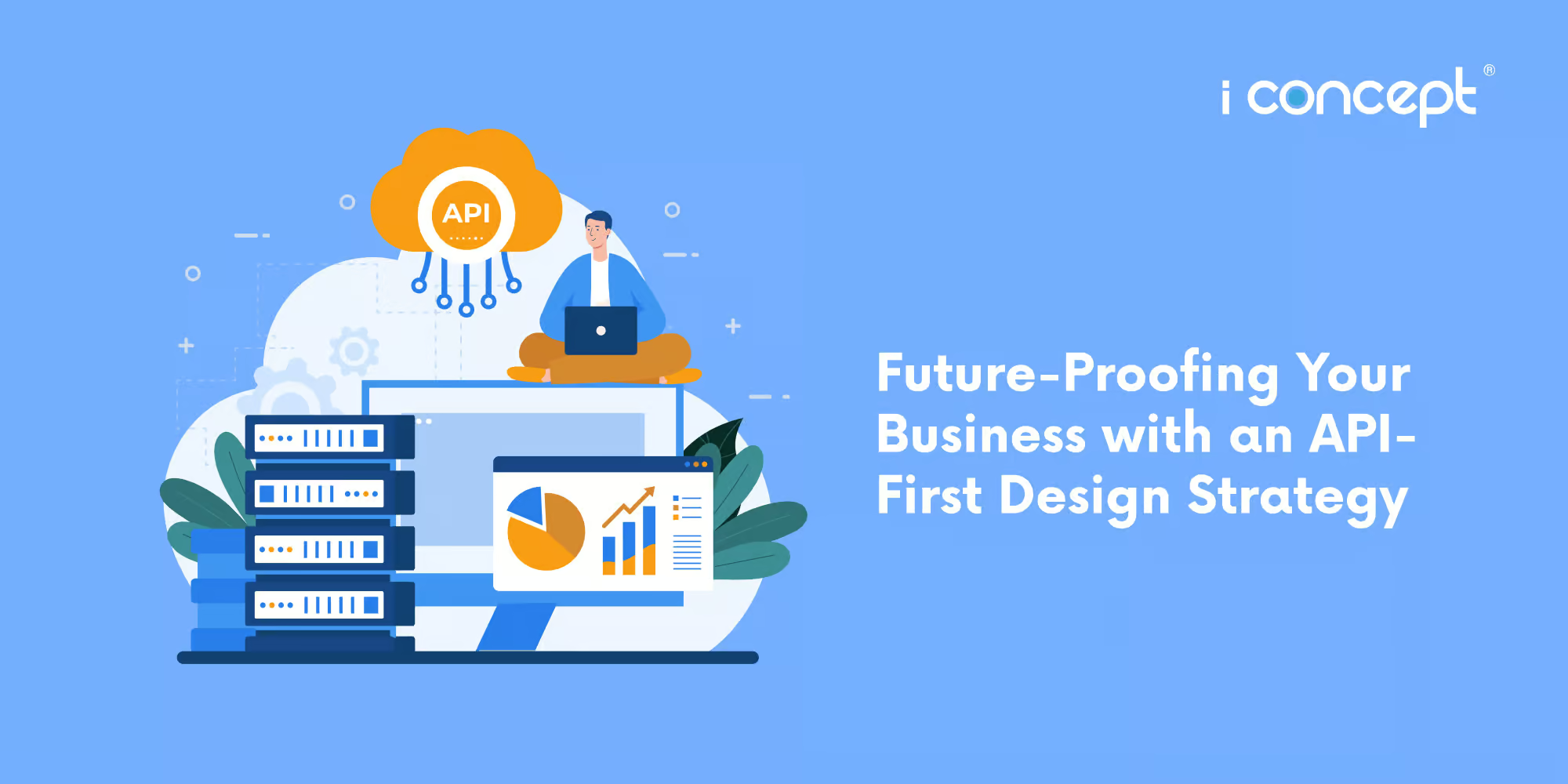
An Application Programming Interface (API) acts as a digital translator, allowing different software systems to “talk” and share information seamlessly. And according to recent industry analysis, organisations that adopt an API-first approach are 2.5 times more likely to outpace their competitors in digital product delivery speeds.
For many businesses, the traditional “monolithic” approach – where the front-end and back-end are inextricably linked – has become a significant “pain point,” resulting in sluggish updates and an inability to scale across new platforms like smart wearables or augmented reality interfaces.
Why API-First Design Enables Modular Architecture
In the current market, agility is the primary currency. API-first design is a strategic shift where the Application Programming Interface (API) is treated as a “first-class citizen.” Instead of building a website and then trying to plug it into other services later, developers design the interface first. This ensures that data can be seamlessly shared across any device or platform from day one.
Data suggests that this approach is more than just a technical preference; it is a financial necessity. Estimates from Gartner indicate that by the end of 2026, over 90% of enterprises will compete on the basis of digital platform ecosystems rather than individual products. By prioritising digital transformation, businesses can reduce long-term maintenance costs by enabling modular updates instead of full system overhauls.
The Global Push Towards Connectivity
Consider the evolution of global retail giants like IKEA. By moving toward a “headless” and API-driven architecture, they managed to decouple their massive product database from their regional shopfronts. This allowed them to launch new mobile features and digital showroom experiences in record time without disrupting their core e-commerce engine. Locally, Singaporean fintech firms have used similar strategies to integrate with the SGFinDex ecosystem, allowing disparate banking data to flow into a single, user-friendly interface. This level of business scalability is only possible when the underlying architecture is designed to be open and communicative.
Navigating the Landscape with I Concept Singapore
Designing for the future requires more than just technical code; it requires a vision that marries branding in Singapore with high-performance engineering. At I Concept Singapore, we specialise in bridging the gap between aesthetic excellence and technical robustness. Our expertise spans across:
- Branding & Identity: Ensuring your digital presence reflects a forward-thinking brand ethos that resonates with a 2026 audience.
- E-commerce Design: Building “headless” commerce solutions that allow you to sell on your site, on social media, and through IoT devices simultaneously.
- Digital Marketing: Leveraging the data-rich environment of API-driven systems to create hyper-targeted campaigns that drive actual ROI.
We understand that moving toward an API-first model can feel like a daunting leap. However, our team is equipped to audit your current infrastructure and implement a roadmap that ensures your business remains relevant as the digital ecosystem continues to fragment and evolve.
Strategic Support for Growth
For local SMEs looking to embark on this journey of digital transformation, the path is made more accessible through various government initiatives. Projects aimed at enhancing your core capabilities or adopting advanced digital solutions may be eligible for support under the Enterprise Development Grant (EDG) or the Productivity Solutions Grant (PSG). These grants are designed to help Singapore-based businesses innovate and scale, ensuring that the cost of future-proofing does not hinder your immediate operational needs.
Ready to Build for Tomorrow?
The window for “catching up” to digital trends is closing. To lead your industry in 2026, you must build on a foundation that is flexible, scalable, and interconnected.
Contact I Concept Singapore today to discover how an API-first strategy can redefine your digital footprint and secure your business’s future.