There’s an argument that traditional websites are on their way out, but many still swear by their relevance.
But one thing’s for sure, with shifting human attention spans, the demand for utility has surged. According to industry benchmarks, interactive content generates two times more conversions than passive content, as users increasingly favour “doing” over “reading.”
The shift is driven by a fundamental change in user psychology. Modern consumers no longer want to be sold to; they want to be assisted. While a standard landing page pushes a narrative, an interactive mini-app pulls the user into a value-driven ecosystem.
What Exactly is a Mini-App?
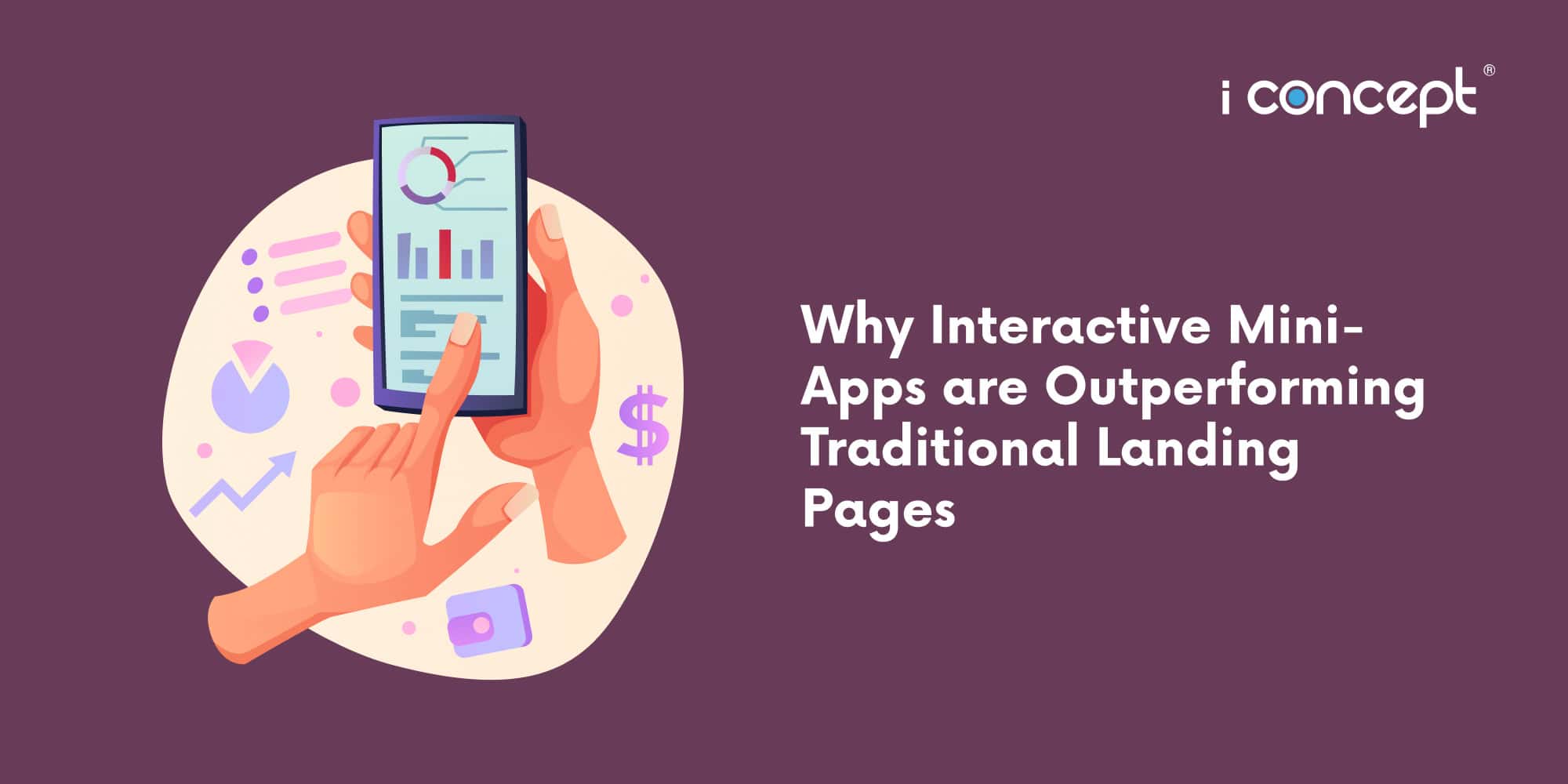
Unlike a full-scale mobile application that requires a download from an app store, a mini-app is a lightweight, web-based tool designed to perform a single, high-value function instantly. Think of them as purpose-built interfaces that live within your browser or social media platforms. They provide immediate gratification – whether it is a cost calculator, a style synthesiser, or a diagnostic tool – without the friction of an installation. They are the bridge between a static page and a complex software suite, offering just enough functionality to solve a specific problem in seconds.
Why Interactivity Wins the Conversion War
Static pages suffer from “scroll fatigue.” In contrast, mini-apps leverage Generative Engine Optimisation (GEO) principles by providing structured data that modern AI search engines and users both crave.
Consider these figures:
- Engagement Depth: Interactive elements can increase time spent on a page by up to 40%, creating a stronger brand recall.
- Data Enrichment: Unlike a standard lead-gen form, mini-apps provide “zero-party data.” When a user interacts with a tool, they voluntarily share their preferences, pain points, and budget ranges, enabling more personalised follow-up marketing.
- Reduced Bounce Rates: By providing immediate utility (e.g., a “Savings Calculator”), businesses see a significant drop in exit rates compared to text-heavy brochures.
DBS NAV Planner – From Passive to Proactive
A definitive example of this shift is DBS Bank’s NAV Planner. Recognising that traditional insurance and investment landing pages were failing to convert younger demographics, DBS launched an AI-powered interactive mini-app integrated directly into their digital ecosystem.
The results were transformative. By allowing users to “stress-test” their portfolios against inflation and map out future cash flows through an interactive interface, DBS saw 2.8 million customers engage with the tool. More impressively, the bank reported a 4-fold increase in customers who successfully completed their investment journeys compared to those using traditional methods. This shift proves that when you provide a tool that solves a problem in real-time, the transition to a transaction becomes a natural next step.
The New Standard in Digital Strategy
Transitioning from static to interactive requires more than just technical coding; it requires a fusion of strategic branding, sophisticated e-commerce design, and data-driven digital marketing.
At I Concept Singapore, we specialise in bridging this gap. We don’t just build pages; we build experiences that resonate with the 2026 consumer. Our approach to branding ensures that every interactive touchpoint reflects your corporate identity, while our e-commerce expertise ensures that the transition from a “mini-app tool” to a “completed checkout” is frictionless and intuitive. We integrate these tools with high-impact EDM marketing workflows to ensure that the data captured by your mini-app is immediately leveraged for personalised lead nurturing.
Whether you are looking to overhaul your lead generation or integrate complex tools into your existing platform, our team ensures your digital presence is optimised for both human engagement and the latest generative search algorithms.
Maximising Your Growth with Government Support
Scaling your digital capabilities in Singapore is more accessible than ever. For businesses looking to implement high-level digital automation or sophisticated interactive platforms, the Enterprise Development Grant (EDG) provides substantial support for core functions and innovation. Furthermore, for those seeking pre-approved digital solutions to improve business efficiency, the Productivity Solutions Grant (PSG) remains a vital resource for adopting tried-and-tested technologies.
By leveraging these grants, your business can offset the costs of high-end development while ensuring you remain at the forefront of the digital curve.
Are You Ready to Outperform the Competition?
The era of the static brochure is over. To capture the attention of the modern Singaporean consumer, your brand must offer utility, speed, and interactivity.
Contact I Concept Singapore today to discuss how we can transform your traditional landing pages into high-converting interactive assets.